 SIGMATIC
 Databricks solution | FinOps
Understand what is driving your Databricks spend.
The Databricks FinOps Accelerator helps platform owners and data leaders monitor consumption, attribute spend and investigate the workloads, teams and resources behind platform cost.
It turns billing and usage information into an operational view that can support optimisation, accountability and better investment decisions.
Demonstration environment uses representative usage data. Customer deployments are configured around the organisation's Databricks account, workspaces, tagging model and governance requirements.
The problem
A monthly bill does not explain where value is being created
Databricks costs can be distributed across workspaces, jobs, SQL warehouses, pipelines, serverless services, users and project teams.
Without a consistent allocation model, organisations may know that total spend has increased without understanding:
- Which workload caused the increase.
- Which team or project owns the consumption.
- Whether the cost is expected.
- Which compute is oversized or underused.
- Where tagging or ownership information is missing.
- Whether optimisation work is reducing spend.
- How costs should be reported to business stakeholders.
The FinOps Accelerator provides a structured way to move from billing visibility to operational accountability. Databricks system tables can expose billable usage, resource metadata, identities, product information and tags, giving organisations the raw foundation needed for account-wide cost analysis.
Who it is for
Built for the people responsible for platform value
Heads of Data
Understand platform cost trends alongside delivery priorities.
Databricks platform owners
Attribute consumption and defend the platform budget with evidence.
Cloud and FinOps teams
Extend existing cloud cost governance to Databricks-native usage.
Data-engineering leads
Identify which jobs, pipelines and warehouses drive cost.
Product and programme owners
See the cost of the workloads their teams are responsible for.
Finance and technology leadership
Get a consistent, defensible view of platform spend for reporting.
See it in use
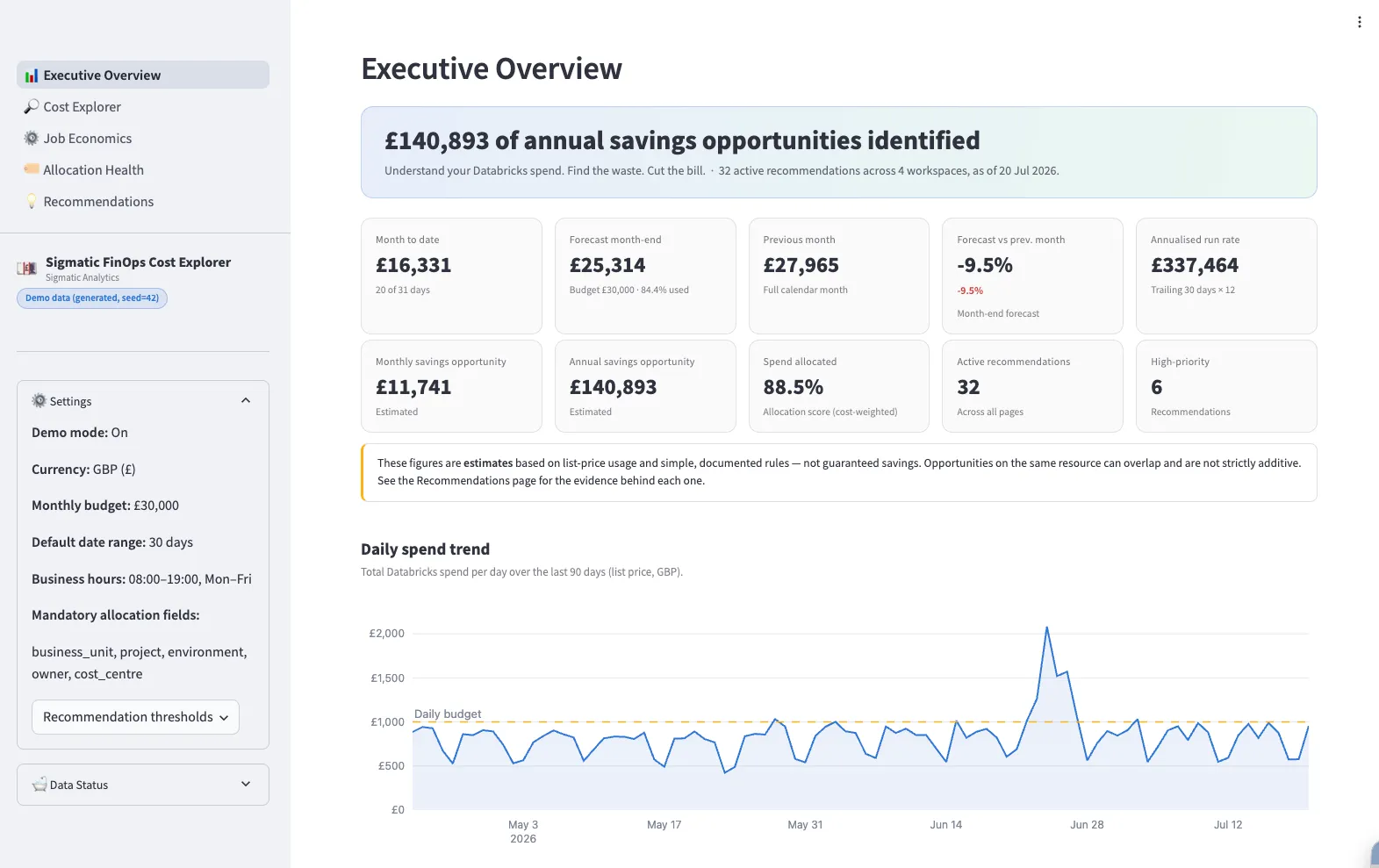
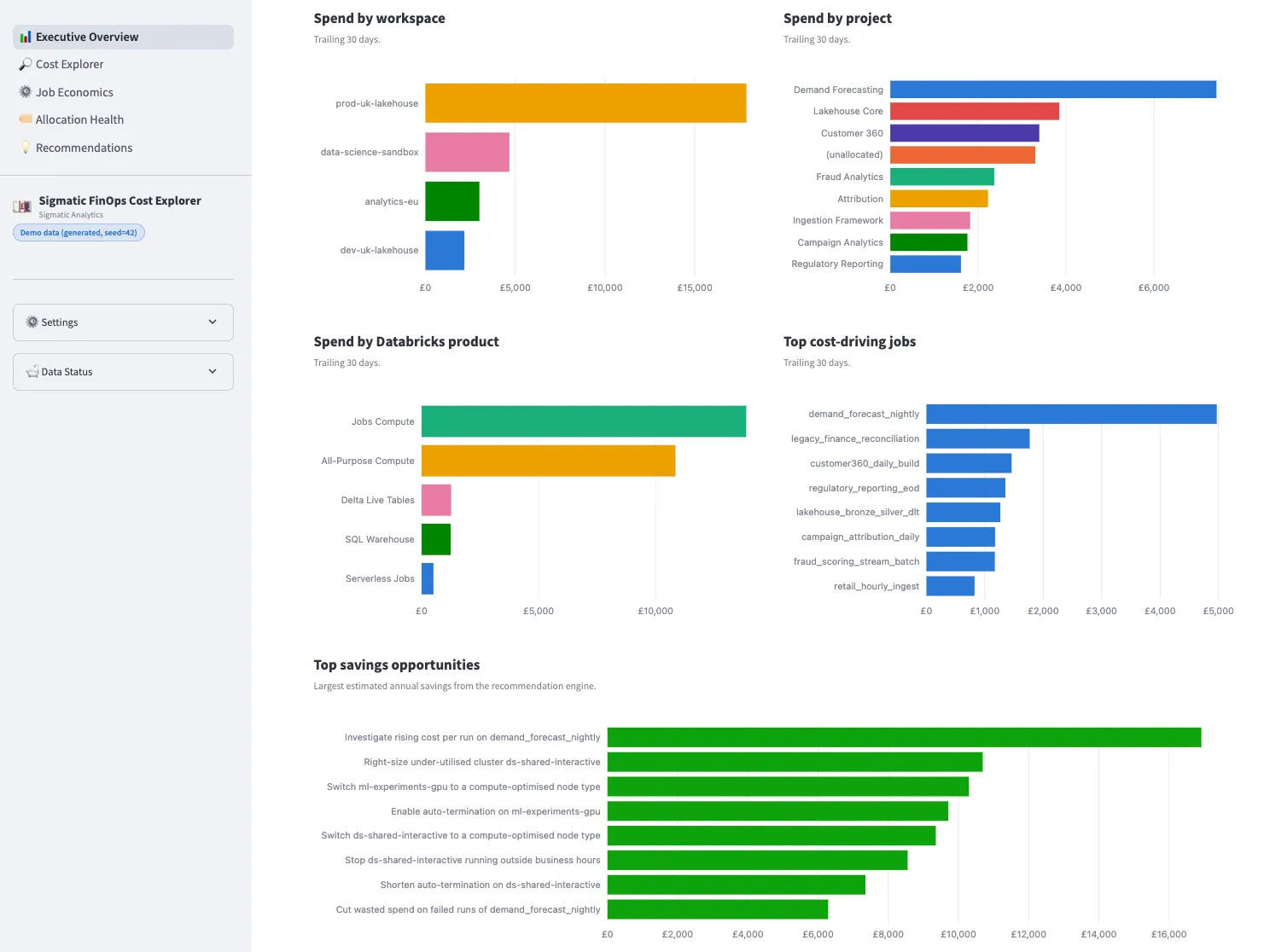
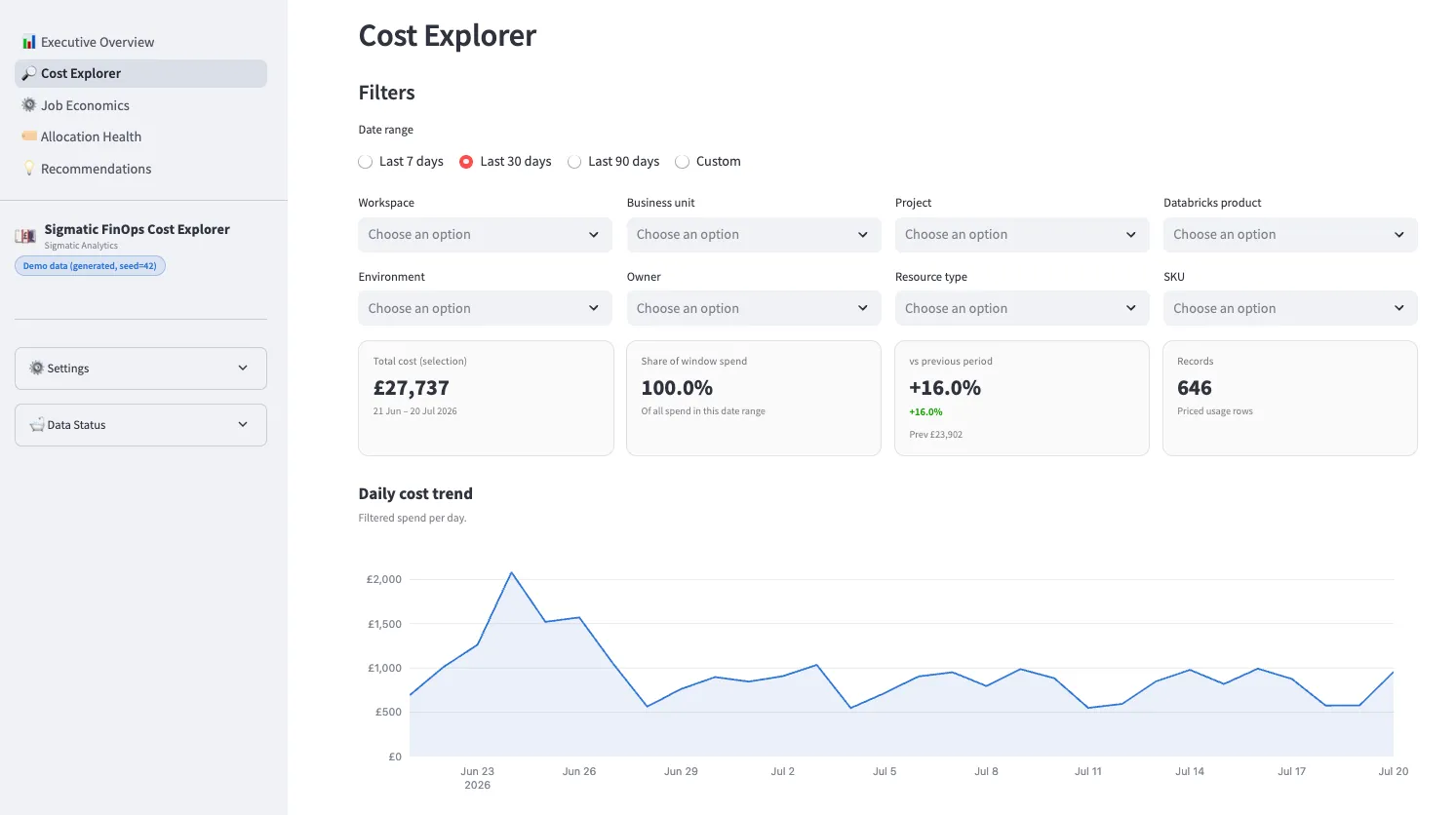
From executive summary to workload-level investigation
Key capabilities
From billing data to cost accountability
Executive cost overview
Monitor total spend, trends, material movements and changes over time.
Workspace attribution
Compare consumption across environments and workspaces.
Team and project allocation
Use tags and account structures to allocate cost to teams, programmes, products or business domains.
Workload investigation
Identify high-cost jobs, pipelines, warehouses, compute resources and other workloads.
Product and SKU analysis
Understand which Databricks products and consumption categories are driving the bill.
Usage and ownership gaps
Identify resources with missing tags, unclear ownership or weak cost-allocation information.
Optimisation tracking
Record opportunities, owners, decisions and expected savings.
Governance reporting
Provide consistent cost views for platform, engineering, finance and executive stakeholders.
Questions this answers
The questions the accelerator helps answer
- Why did Databricks spend increase this month?
- Which workspace is driving the largest movement?
- Which jobs or resources account for the greatest cost?
- Which projects have no usable allocation tags?
- Are expensive workloads associated with identifiable owners?
- How much spend is associated with development and test?
- Which cost reductions have actually been realised?
- Where should the platform team focus first?
Data foundation
Built on Databricks usage and operational metadata
Unity Catalog system tables make account-level operational and billing data available through the system catalog, including billing and access-related schemas.
Availability and attribution depth depend on the Databricks products in use, the organisation's tagging discipline and the quality of ownership metadata.
The service behind the application
A cost dashboard alone does not create cost control
The accelerator can be deployed as part of a wider Databricks FinOps review covering:
The objective is not to minimise every workload. It is to make costs understandable, attributable and proportionate to the value being delivered.
Engagement options
From a guided demonstration to ongoing governance
FinOps demonstration
Guided demonstration of the existing accelerator.
Databricks cost review
A focused review of current usage, allocation and optimisation opportunities.
Configured deployment
Deployment of the accelerator against the customer's own Databricks environment and reporting structure.
Ongoing cost governance
Optional monthly or quarterly optimisation and governance review.
Get in touch